Schubert, "Heidenröslein"
There are some terrible performances of this on YouTube. Here is one of those lame videos where someone posted a recording with a photo.
This will be well recorded, commercially. I like Bryn Terfel's An Die Musik (iTunes Amazon MP3 DG Downloads MusicBrainz)
Schumann, "Wenn ich in deine augen seh'" from Dichterliebe, Op. 48
Again, multiple youtubes, here is a guy in shorts and a polo shirt. Also I found a free recording.
(Pseudo-) Pergolesi, "Se tu m'ami", mm. 1-28
Here's a free recording (performed with harp) and a youtube of Cecilia Bartoli singing it.
Mozart, "Se vuol ballare" from The Marriage of Figaro Act I
YouTube of Byrn Terfel performing it at the Met. Also found a free recording.
Mozart, "Voi che sapete" The Marriage of Figaro Act II
The more I look at this one I realize it's a lot more difficult to analyze than I remembered. Try this one only if you are feeling super-ambitious.
YouTube of Frederica von Stade.
So, we made it! If you can understand everything in the Chromatic Packet, you are now pretty much ready to tackle any piece of Classical music.
Then we talked briefly about the Neapolitan Six chord, which is explained on page 6 of our Chromatic Progressions Packet. And I'm afraid we have to have a little homework on this. Here's our Worksheet on Neapolitans. HW is to analyze Part A (yet another Schubert song). It's not difficult, I promise!
Here is a YouTube of the Schubert: Ian Bostridge's triumphant return! I own Sanford Sylvan's recording (iTunes Amazon MP3) which seems fine.
Ear-Training
Next week is your last chance to ask questions about your Final Project. In class we actually spent time singing four out of the five selections - I think most of them will be easy and fun to do, though I do have to practice in order to become a better accompanist. Feel free to email me as well if you have a particular question about your piece.
Instead, we delved into the world of "secondary dominants", which is explained in the Chromatic Progressions Handout. Homework is a worksheet on secondary dominants. We did most of Part B in class, and I left part A for you at home. We've now peeked at every single movement of Beethoven's "Pathétique" sonata. There is a decent free recording at pianosociety.com, and I previously recommended the Wilhelm Kempff historical recording on Deutsche Grammophon (iTunes DG Downloads Amazon MP3 Amazon CD).
In addition, I introduced our final project for June 24. I'll start a special entry here in the blog for links and stuff soon. For this week your assignment is to take a look at the five songs in this packet and think about which one you might perform and analyze.
We spent class going over the Bach chorale worksheet. I had intended to get into "secondary dominants" but we ran out of time, and there was a request for more practice material on modulations. So here it is, worksheet "12-B".
I can't find a freebie of K. 284, but you could pick up a recording by Zeynep Ucbasaran (iTunes eMusic) or Alicia Delarrocha (Amazon MP3).
There are a few free recordings of the K.330, second movement at pianosociety.com, and if you were buying a copy I'd suggest Richard Fuller's recording (iTunes Amazon MP3 eMusic). Remember that you need to wait a while until our excerpt kicks in.
Ear Training
Due to overwhelming popular demand I introduced "chromatic solfege" this week. I've got a handout on the new syllables we'll use, and a very old sheet with chromatic melodies on it. I assigned melodies 2 and 5 for homework.
We went over our little Haydn minuet. Answers are actually in the Modulation Packet if you need them.
Then we talked about modulation (which, as you might expect, is covered in the Modulation Packet.) Homework is to do both pieces in the Modulation Worksheet. (Don't worry, both are pretty easy, I think.) Here are your shopping guides for the two pieces.
I really do like this CD with Bryn Terfel:
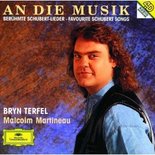
iTunes Amazon MP3 DG Downloads MusicBrainz
Ear Training
In Ear Training class we dove back into the murky and depressing world of minor keys. We did our "arpeggiation game" in minor, and tried our hands at some melodies from deep in the packet. Homework for all is to practice melodies 139, 141, and 144 (just melodies, though of course you can play the chords if you want.)
We went over Mozart Piano Sonata in A Major, K.331. I spent a little time talking through the five different cadence types, which are also explained within the progressions and cadences handout, and I drew a little diagram of the Mozart. The chordal analysis and diagram are in my Mozart K. 331 Answer Key.
Homework for this week is a few phrases from Haydn String Quartet in G Major, Op. 64 No. 4, Second Movement. Worksheet. Should be quick and relatively painless.
iTunes
The Lindsays would be an adequate source
Amazon MP3 eMusic Archivmusik
Also, it looks like BPL has a complete string quartets available on CD.
Ear Training
This was a straightforward session with some melody reading. We heard sing-and-play homework from Richard (in an encore performance) and Barbara. No new homework.
We went over the suspensions worksheet. I cooked up an answer key for those who weren't with us.
We reviewed our "progressions flowchart." You can read through the progressions and cadences handout for a refresher on that. We added one new element we haven't talked about before, the "cadential 6-4" (handout p.29).
Homework is to analyze the theme from Mozart Piano Sonata in A Major, K.331.
Or this would be a nice, inexpensive purchase:
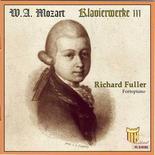
iTunes Amazon MP3 eMusic
(It's played on a historically accurate "fortepiano," which sounds like a cross between
harpsichord and piano.)
Ear-Training
We heard Tania and Richard do their sing-and-play assignments. Left to go are
Madonna: 91
Evelyn: 100
Barbara: 101
We went over the Beethoven "Pathétique" Sonata (which is on the second page of the non-chord tones worksheet). We decided that "escape tones" are pretty annoying, and I started calling them "fancy ants" (anticipations) instead.)
Homework was a worksheet on suspensions.
Ear-Training
Rachel sang her sing-and-play assignment. I still need to hear 5 more!
We spent the period going over the Beethoven Violin Sonata in a fun and somewhat raucous session. Homework is to do the B-side of the non-chord tones worksheet, the "Pathétique" Sonata third movement.
I also handed out a large packet on Progressions and Cadences for your reading pleasure.
Here's shopping info on the Beethoven:
My Beethoven "greatest hits" recording is Wilhelm Kempff: Beethoven Piano Sonatas Nos. 8, 14, 21 & 23 [Deutsche Grammaphon]
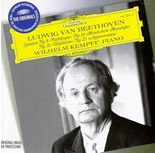
iTunes DG Downloads Amazon MP3 Amazon CD
An interesting recording of essential works. It's an old performance, so the sound is OK but not super-glossy.
We knocked off the remaining four sing-and-play assignments, and, since we are on a break, I gave out new assignments. These are all about I and V7 (or "Wicked V7 Action", as I used to call it.)
Madonna: 91
Rachel: 93
Tania: 94
Evelyn: 100
Richard: 99
Barbara: 101
Remember, the plan is to do 2 per class, for three weeks. However, if nobody is ready for the next class it will be very lame, so, um, please practice if you can.
Next class is April 22. Hope you all had a nice holiday!
We went over the Magic Flute homework, and then started talking about non-chord tones. (Which are included in that massive handout I gave you at the beginning of the term. Or here - NCT handout.) Homework is the first half of this non-chord tones worksheet.
Here are some resources for recordings of the Beethoven:
If you wanted to obtain a commercial recording, a decent budget option would be
Beethoven: Complete Violin Sonatas / Rosand, Fissler [Vox]
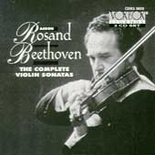
eMusic
Archivmusik
And I'd bet this one is great - Ovation - Beethoven: The Violin Sonatas / Perlman, Ashkenazy [Decca]
iTunes
Amazon MP3
Archivmusik
In addition, Brooklyn Public Library at Grand Army Plaza seems to have two recordings
Ear-Training Class
I thought this was a nice, productive session. We warmed up with a few melodies that move through I, IV and V (around no. 119 in the packet) and heard two people do their homework assignments on piano. We'll hear some more people next week! (See below if you can't remember your assignment.)
We finished off the class with a 2-part dictation that was more in the "active melody plus bass line" category. I've got a web dictation unit on this as well if you want more practice.
We went over our Chopin Prelude in A Major, Op. 48 No. 7, and then reviewed our inversion symbols for both triads and seventh chords. (We are still working off of this old handout for those.)
In class, we went through the chords for Thomas Morley's "Now is the Month of Maying".
For homework, we will analyze Papegeno's "Lock" Aria from The Magic Flute.
Here are some sources for recordings of this music.


Or if you are using eMusic, you could download from the Naxos version. (This week's piece is track 6.)
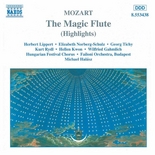
BPL has a "historical" recording and two DVDs of it. [one] [two]
and here's a YouTube video of our scene
Ear Training
We started with some basic rhythmic practice, then we rocketed to the back of the packet and sang some melodies that feature IV (or even ii), circa Nos. 119-122. Homework is to practice the piano accompaniment to one or two of these (in 4-parts like we learned last semester, bass line in the left hand and triads on top) while singing. Everyone has a specific assignment.
Tania: #126
Richard: #125
Evelyn: #123 and #128 (remember 128 has a typo, "VI" instead of "IV")
Barbara: #121 and #129a
Madonna: #119 and #123
We also tried our hands at a two-voice dictation. This proved difficult. I've got a unit of similar examples is my web dictation. Remember, there is no class on the 18th. See you on the 25th!
This was a very light crew of two. It's no big deal - it's a rough time of year and I know that things happen. So, we took it somewhat easy, doing a big review of minor keys (making an all-minor circle-of-fifths on the board) and going over the worksheet on the seventh chords. (Here's an answer sheet for those of you playing along at home. The first person to find an error wins a free coke.)
Homework is this worksheet on Chopin's Prelude in A Major, Op. 48 No. 7. Read the instructions on the first page and then put in roman numerals.
This semester I'm going to encourage you guys to acquire recordings of the major pieces we look at. So...
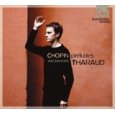
Chopin: Préludes Op.28 (Alexandre Tharaud) [harmonia mundi]
iTunes
Amazon MP3
Amazon CD
eMusic
a possible budget choice
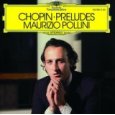
Chopin: Twenty Four Préludes Op.28 (Maurizio Pollini) [Deutsche Grammophon]
DG Downloads
iTunes
Amazon MP3
Amazon CD
this one is classic, highly recommended
BPL Central Library seems to have two recordings.
Ear-Training
We looked at a few melodies that move between I and V. Students took turns playing progressions at the piano while the rest of us sang. Also, we did a little rhythmic practice, conducting and reciting rhythms from the back of the packet, and a little rhythmic dictation.
Theory Class
So far we seem to have the same, great group as last time (though we missed two of our classmates for this session!) So, I dug right in and introduced some new material.
One general point: I'm trying to design this semester as though it is a fresh start, and so you probably won't need to drag all of your old materials to class. I gave out a big handout that has some redundant pages, already.
We talked about seventh chords both in the abstract (as in "how do you make a dominant seventh chord") and thinking about how they fit into the keys. I've got a handout on this and a version with the answers filled-in if you need it.
Homework is a worksheet on the seventh chords.
Ear-Training
We have one new student, possibly bringing us to a total of six! While she wasn't in our previous class, I am confident that she's going to catch up fast. (It's mostly just a matter of drilling the syllables.)
Remember that if you have a PC you can try my solfege driller, and anybody with an internet connection can do web dictation.
So on our first class we basically re-introduced our basic activities - warmups with scalar patterns, reading a few melodies, the "arpeggiation game", and a dictation.
There is no future stuff ready. I gotta get to work!